Preventing type 2 diabetes
Dr Shireen Kassam, Director of Plant-Based Health Professionals UK
How does type 2 diabetes develop?
T2D is characterised by insulin resistance, when the body can no longer respond to increasing levels of insulin secreted by the pancreas. Cells become resistant to insulin when they accumulate abnormal amounts of fat, usually as a consequence of being overweight or obese. This results in elevation of blood glucose. Persistently high levels of blood glucose damage cells and organs. It should be remembered that high blood glucose is the symptom and not the cause of type 2 diabetes.
It is interesting to note the concept of a ‘personal fat threshold’. That is, each person has a different capacity to store fat under the skin. When this storage has reached capacity, it spills over and leads to accumulation of fat inside the cells of the liver, pancreas and muscle, making them resistant to the effects of insulin. This is why people of seemingly normal body weight can still develop T2D, because they have exceeded their personal fat threshold.
Insulin resistance is implicated in a number of other chronic diseases, including atherosclerosis and cardiovascular disease, dementia, polycystic ovary syndrome and even cancer.
What are the risk factors for type 2 diabetes?
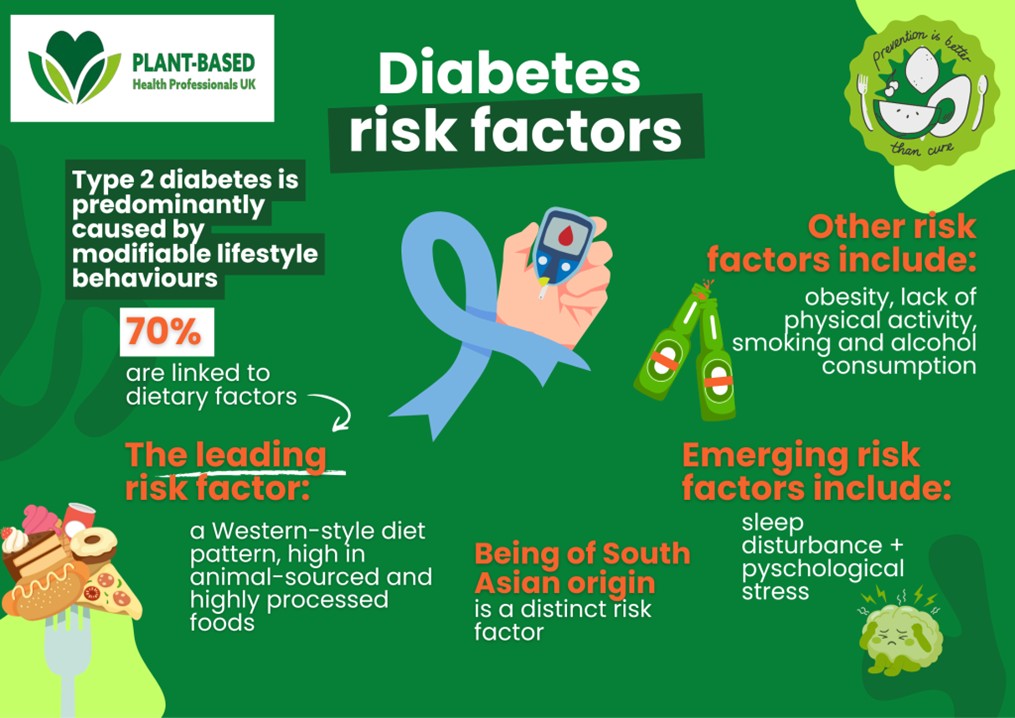
Type 2 diabetes is predominantly caused by modifiable lifestyle behaviours, with 70% of this risk linked to dietary factors. A Western-style diet pattern, high in animal-sourced and highly processed foods, is the leading risk factor. Other risk factors include obesity, lack of physical activity, smoking and alcohol consumption. Emerging risks include sleep disturbance and psychological stress. These risk factors usually drive increases in body weight, which in term promotes the development of T2D.
It’s worth noting that being of South Asian origin is a distinct risk factor, with T2D occurring more frequently and around a decade earlier than in White populations. This is thought to be due to the lower ‘personal fat threshold’ due to a genetic propensity to lay down visceral fat at lower body weights.
Preventing of type 2 diabetes
Healthy diets
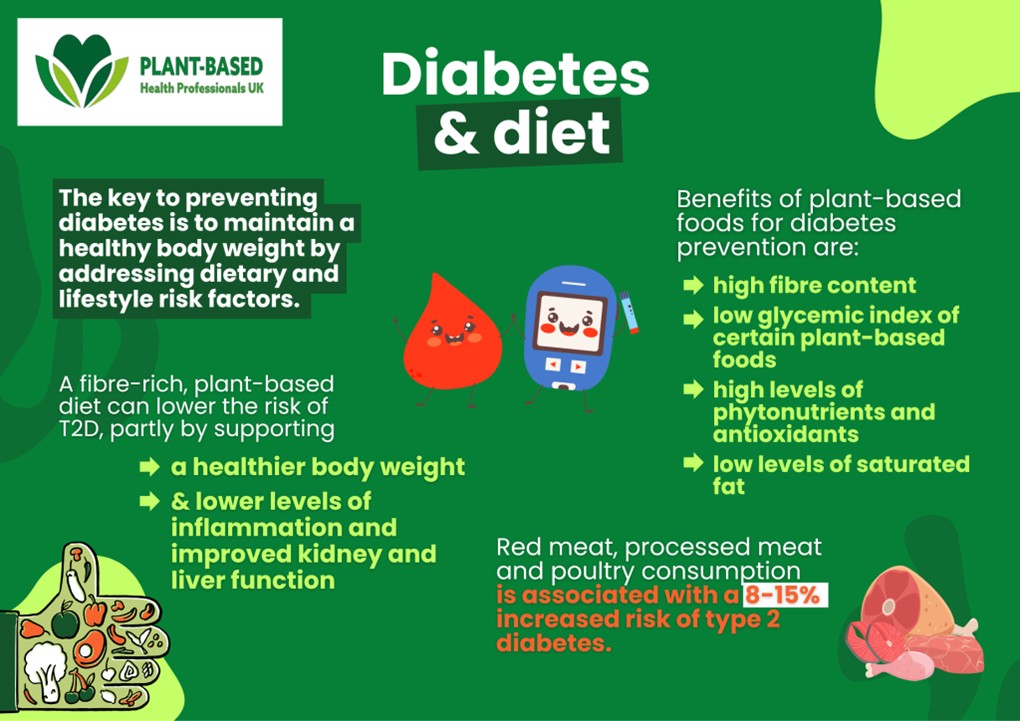
The key to preventing diabetes is to maintain a healthy body weight by addressing dietary and lifestyle risk factors. The consensus supports a fibre-rich plant-rich or fully plant-based diet for lowering the risk of T2D. In the Adventist Health Study-2, vegans had a 49% decreased risk of T2D compared to non-vegetarians and this represented the lowest risk of all the diet patterns compared. In the EPIC-Oxford study, those avoiding meat had around a 50% reduced risk of T2D when compared with regular meat eaters. However, the effect was reduced once results were adjusted for body weight. The fish eaters had the lowest incidence of T2D, but it should be noted that this group was small and results in the literature have been inconsistent. In the Tzu Chi Health Study from Taiwan, vegetarians had a 35% reduction in the risk of developing T2D, and converting from a non-vegetarian to vegetarian diet during the follow-up was associated with a 53% reduction in risk.
Combined results from the Nurses’ Health Study and the Health Professionals follow-up study have shown that those eating a healthy plant-based diet (not necessarily vegan or vegetarian) composed of predominantly whole grain, fruits, vegetables, nuts, seeds and unsaturated fats, have a significantly reduced risk of T2D. A diet that emphasised plant foods and was low in animal foods was associated with a 20% reduction in the risk of T2D. Consumption of a plant-based diet that included specifically healthy whole plant foods was associated with a larger decrease (34%) in risk, while consumption of a plant-based diet high in less healthy plant foods (processed foods and refined grains, potatoes and fruit juice) was associated with a 16% increased risk of T2D. There was a dose relationship between the consumption of healthy whole plant foods and the reduction in risk of diabetes – the more plant foods consumed the lower the risk. The study suggests that increasing intake of healthy plant foods while moderately reducing intake of some animal foods, especially red and processed meats, could be beneficial for diabetes prevention.
Encouragingly, a further updated analysis from the same study cohort showed that improvement in diet quality over time can reduce the risk of developing T2D. Every 10% increase in adherence to a healthy plant-based diet reduces subsequent risk of diabetes by 7-9%. The converse was also true with a 10% decrease in plant-based diet quality resulting in a subsequent 12–23% higher risk of diabetes. This provides hope that diet change is beneficial regardless of age.
It is also worth noting that healthy plant-based diets can reduce the risk of gestational diabetes, which is also a significant risk factor for future development of T2D.
How plant-based diets prevent T2D
Plant-based diets are well known for supporting a healthier body weight. Interestingly, an analysis from the UK Biobank cohort showed that reductions in body mass index was only partly responsible for the reduction in risk of T2D, with additional benefits of a healthy plant-based diet coming from lower levels of inflammation and improved kidney and liver function.
The benefits of plant-based foods for diabetes prevention are the high fibre content, the low glycaemic index of certain plant-based foods, high levels of phytonutrients and antioxidants and low levels of saturated fat.
Antioxidants such as polyphenols may inhibit glucose absorption, stimulate insulin secretion, reduce hepatic glucose output, and enhance glucose uptake. Fibre maintains a more consistent blood sugar level and is fermented by intestinal bacteria to produce short-chain fatty acids, which also improves the glucose response, insulin signalling, and insulin sensitivity. Fibre reduces the energy density of foods, promotes satiety, and has been associated with maintaining a more healthy weight, which in turn promotes insulin sensitivity.
Can you eat too much fruit?
People often worry about consuming ‘too much fruit’ when it comes to diabetes prevention. The confusion arises with the fact that fruit contains fructose and fructose consumption is associated with an increased risk of chronic disease.
However, when fructose is present in whole fruit, combined with fibre and micronutrients, there is no detrimental effect on health outcomes. Quite the opposite. An analysis from the EPIC study analysed fruit and vegetable consumption in 9754 participants with and 13, 662 participants without type 2 diabetes. The novel aspect of this study was that plasma biomarkers of fruit and vegetable consumption were measured, such as vitamin C and carotenoids, to give a more accurate indication of consumption. The results showed that fruit and vegetable consumption was associated with a significantly reduced risk of T2D, in the order of 20-30%, and that even small to moderate increases in consumption were beneficial. Numerous other studies have confirmed the benefits of fruit consumption for multiple health outcomes, including T2D. Even dried fruit can provide benefits.
Meat consumption and type 2 diabetes
Consuming protein from animal sources has consistently been associated with an increased risk of T2D. Red meat, processed meat and poultry consumption is associated with a 8-15% increased risk. In the EPIC study, a dose-response was demonstrated with every 5% of calories derived from animal protein being associated with a 30% increased risk of developing T2D..
In contrast, when food substitutions were examined in the Nurses Health Study and Health Professionals Follow-up Study, one serving of nuts, low-fat dairy, and whole grains per day substituted for one serving of red meat per day was associated with a 16–35% lower risk of T2D.
How does meat increase the risk of type 2 diabetes?
Ultra-processed foods and type 2 diabetes
High intakes of ultra-processed foods (UPFs) are contributing to the burden of chronic disease, including increasing the risk of T2D. However, not all UPFs are equally harmful and some, such as whole grain bread and cereals, are associated with good health outcomes. The most harmful subtypes are processed meat, sugar-sweetened beverages and foods and snacks high in saturated fat, salt and free sugars. UPFs increase the risk of T2D when they contribute to excess calorie intake, thus driving overweight and obesity. In addition, consumption of fructose, in the form of table sugar and high fructose corn syrup, when in excess of calorie requirements, increases the production of triglycerides, contributing to obesity and also the accumulation of fat in the liver and muscle cells, promoting insulin resistance.
Physical activity
Meeting international recommendations for physical activity, 150 minutes of moderate intensity activity and strengthening activity at least twice per week, is associated with a lower risk of T2D. Studies show that any level of physical activity is better than none, the more the better, with benefits throughout the lifespan. In a large UK-based cohort study, the equivalent of a daily 20-min brisk walk was associated with an almost 20% reduction in risk of T2D. In addition, sedentary lifestyles, such as long periods of time sitting watching TV, at the computer or driving, are also increase the risk of T2D.
Physical activity helps to maintain a healthy weight, reduces the accumulation of fat in the organs such as the liver and muscles, promotes insulin sensitivity, reduces inflammation and supports the health of the gut microbiome.
Other healthy habits
Avoiding cigarette smoking or quitting if you are a smoker is associated with a lower risk of T2D. Although the data on alcohol consumption and diabetes risk is mixed, for overall health, including for cardiovascular health and cancer prevention, it is best not to drink alcohol.
Regular and sufficient sleep aiming for 7-9 hours a day is important, with less and more hours of sleep impacting the risk of T2D. Managing stress, time in nature, and fostering healthy relationships and reducing loneliness all contribute to overall health and may reduce diabetes risk.
Top tips of preventing diabetes
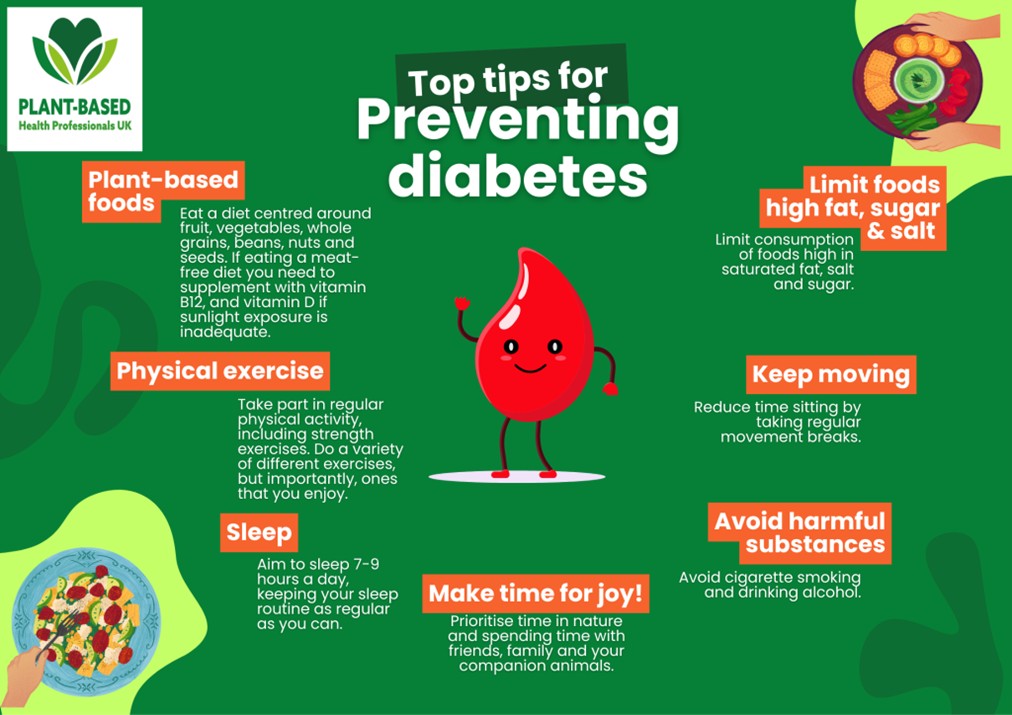
- Eat a diet centred around fruit, vegetables, whole grains, beans, nuts and seeds. If eating a meat-free diet you need to supplement with vitamin B12, and vitamin D if sunlight exposure is inadequate.
- Limit consumption of foods high in saturated fat, salt and sugar.
- Take part in regular physical activity, including strength exercises. Do a variety of different exercises, but importantly, ones that you enjoy.
- Reduce time sitting by taking regular movement breaks.
- Aim to sleep 7-9 hours a day, keeping your sleep routine as regular as you can.
- Avoid cigarette smoking and drinking alcohol.
- Prioritise time in nature and spending time with friends, family and your companion animals.